





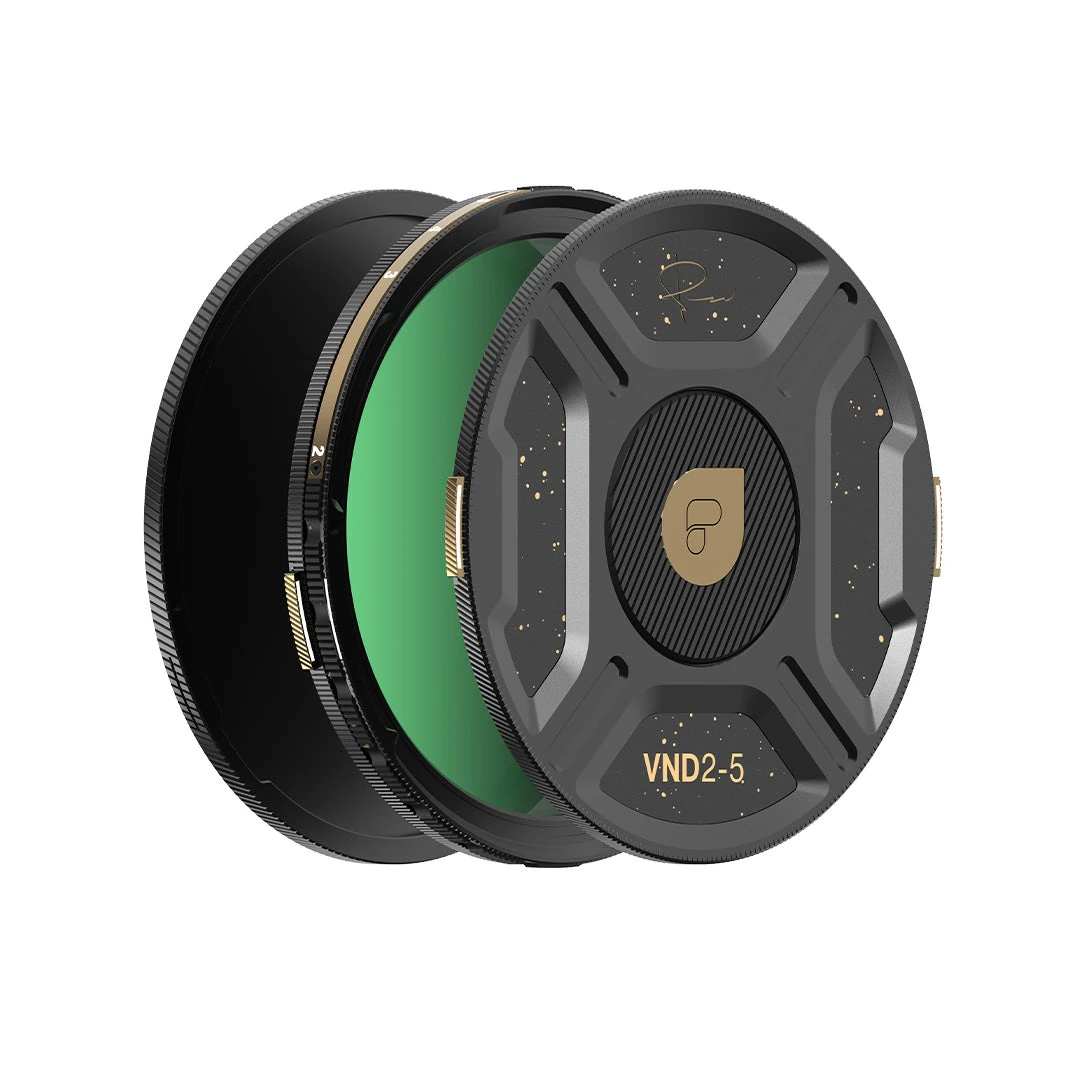
Some pieces of equipment change the image. Others remove the little obstacles between you and making it. The Peter McKinnon PolarPro Helix MagLock VND 2–5 has done both for me. I really like the image quality, but the biggest surprise of this purchase was how comfortable it became to move a filter between two lenses.
I bought two 77 mm Helix Base Plates alongside the filter. With a plate already fitted to each lens, moving the same VND between them is wonderfully straightforward. The magnet catches it, the parts settle together and the lock completes the connection. My description of that experience is simple: click, carry on.
The Defender caps supplied with the adapters were another surprise. They are excellent. I did not expect to devote a substantial part of a filter review to lens caps, but the quality of a system also shows when you are putting it away.
The system I bought
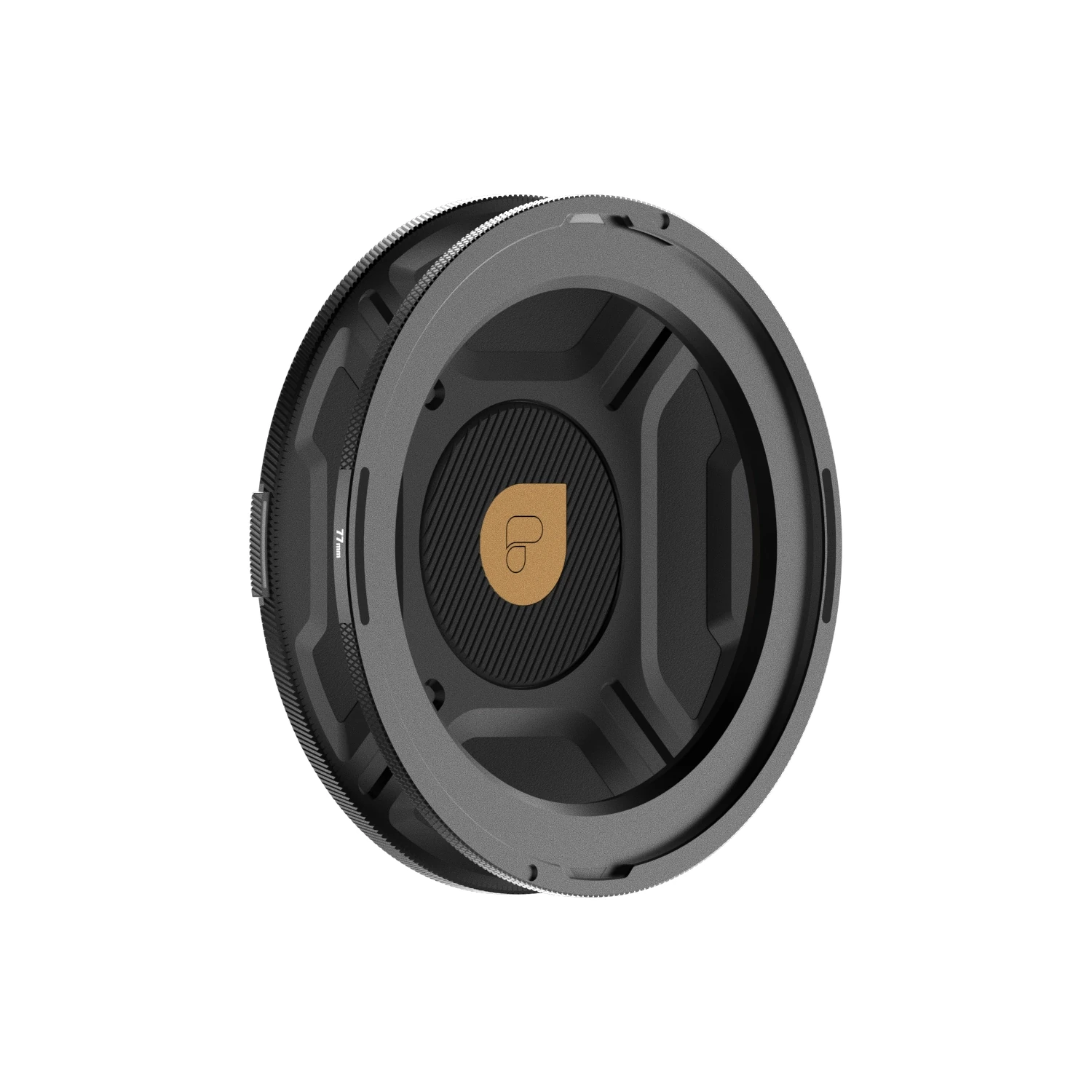
First, the names. PolarPro calls the adapter mounted on the lens a Helix Base Plate. Both of mine are 77 mm. The protective cover included with each adapter is called a Base Plate Defender, or Defender Cap in the product description. When the filter is on the other lens, that cover protects the lens left behind. These parts make sense as a complete setup.
The 77 mm measurement refers to the lens filter thread. Helix filters themselves do not have a conventional lens thread; they attach through their dedicated Helix connection. PolarPro specifies a 101 mm outer frame diameter for Helix. The purchase decision is therefore about matching a Base Plate to your lens thread and choosing a Helix-compatible filter. The manufacturer's Helix FAQ explains the dimensions and connection.

This matters because a useful accessory setup begins with parts that actually work together. Mine consists of two 77 mm mounting points and one VND moving between them. That arrangement tells you more about this experience than a list of lens names would.
Why buying two adapters made the difference
One Base Plate is enough to use a filter. But if you regularly move between two lenses, removing the adapter and threading it onto the next lens gives back much of the convenience you hoped to gain. Buying two adapters changed that for me: the destination lens is already ready.
There is no separate filter preparation during the lens change. I am not looking for another ring or finding the start of a filter thread each time. The plates stay on their lenses, so the movement is direct. The filter comes off one connection and goes onto the other.
Small interruptions accumulate during a shoot. Changing a lens already means reconsidering framing, distance and the feeling of the image. Having one less accessory task to think about is welcome. This is where I felt the value of Helix most clearly: the filter stops being another little job to manage in my head.
The magnet works with a lock
It feels natural to say that the filter simply snaps on magnetically. However, Helix MagLock uses a magnetic connection and a quarter-turn lock together. The magnet brings the parts together; a short rotation mechanically secures them. PolarPro describes that operation on its official McKinnon Helix page.
The satisfying click I enjoy is not a reason to skip the locking step. What makes the system convenient is completing the connection with a short, deliberate movement instead of turning a filter through several threads. Knowing when the attachment is complete is part of what makes it comfortable to use.
Calling Helix a strong magnet alone would therefore miss something. The entire mounting design makes moving the filter easier. It is an idea that becomes much clearer in your hands than in a paragraph of technical description.
What 2–5 stops gives me
VND means variable neutral density. Turning the ring changes how much light the filter removes within a defined range. Here that range is two to five stops, equivalent to ND4 through ND32. At two stops, one quarter of the light passes through; at five stops, one thirty-second passes through.
The practical purpose is to avoid changing aperture or shutter speed simply to rescue exposure when there is too much light. Imagine choosing a shutter speed near 1/50 second for a 25 fps video. If the scene is too bright, ND reduces the light while letting you keep that motion rendering.
The same principle applies to photography when you want to keep a wide aperture as a creative choice. A VND lets you adjust light reduction without taking another fixed-strength filter out of the bag. Quick lens changes and quick light adjustment become part of the same arrangement.
Two to five stops is a working range, though. Very strong sunlight, a wide aperture and your selected ISO may require more than five stops. Liking this filter does not make its density unlimited. The useful question is whether its range suits the image you want to make.
Image quality: I am very pleased
I really like the quality of the image from this VND 2–5. That is the clearest statement I can make about my experience. I do not like it only because it is easy to fit; I also like the results. The mounting convenience matters because the image is satisfying too.
This assessment describes my satisfaction with the results in my own use. It does not claim to provide numerical optical measurements of colour accuracy or corner performance.
The McKinnon VND 2–5 discussed here should also be identified accurately. Chroma VND/PL, with independent polarisation control, is a separate product described in PolarPro's Chroma VND/PL documentation. The functions I am discussing here are variable light reduction and the Helix connection.
I have written separately about my experience with the PolarPro Vivid set for Mavic 4 Pro, which combines ND and polarisation. My reasons for enjoying the two products complement each other; explaining their functions accurately helps keep that distinction clear.
The unexpected star: Defender caps
Back to the caps included with my two adapters. They look great, feel beautifully made and are seriously stylish. In my hands, they did not feel like an afterthought thrown into a box. The way they cover the lens and sit on the complete setup became a meaningful part of the purchase.
Compared with my own original Sigma caps, the Defenders feel much higher in quality and more protective. That is my personal comparison with the caps I own. I value that reassuring feeling in a part I handle regularly.
I also enjoy their appearance. I care about how equipment looks, especially when that design belongs naturally in the way it is used. Moving the filter to another lens and covering the remaining lens with a matching cap makes the whole purchase feel more complete. PolarPro confirms that a cap comes with each Base Plate on its official adapter page.
The McKinnon signature and my verdict
Peter McKinnon seems a little wild to me. I really like the products carrying his signature, though. Here, what convinced me was the thought I could feel in the equipment: ready connections on two lenses, a filter that moves easily, an image I enjoy and good caps in the box.
That completeness is Helix VND 2–5's strongest quality for me. I have bought a way of making lens changes more comfortable as well as a piece of glass. Someone working with one lens may weigh the convenience differently. With two 77 mm Base Plates, I understood the idea behind this system much better.
I am very happy with this purchase. I like the VND quality, the easy changes and the Defender caps individually. Above all, I like having all three together. The filter moves to the next lens, and my attention returns to the frame.
Product images and logo: PolarPro's official website.