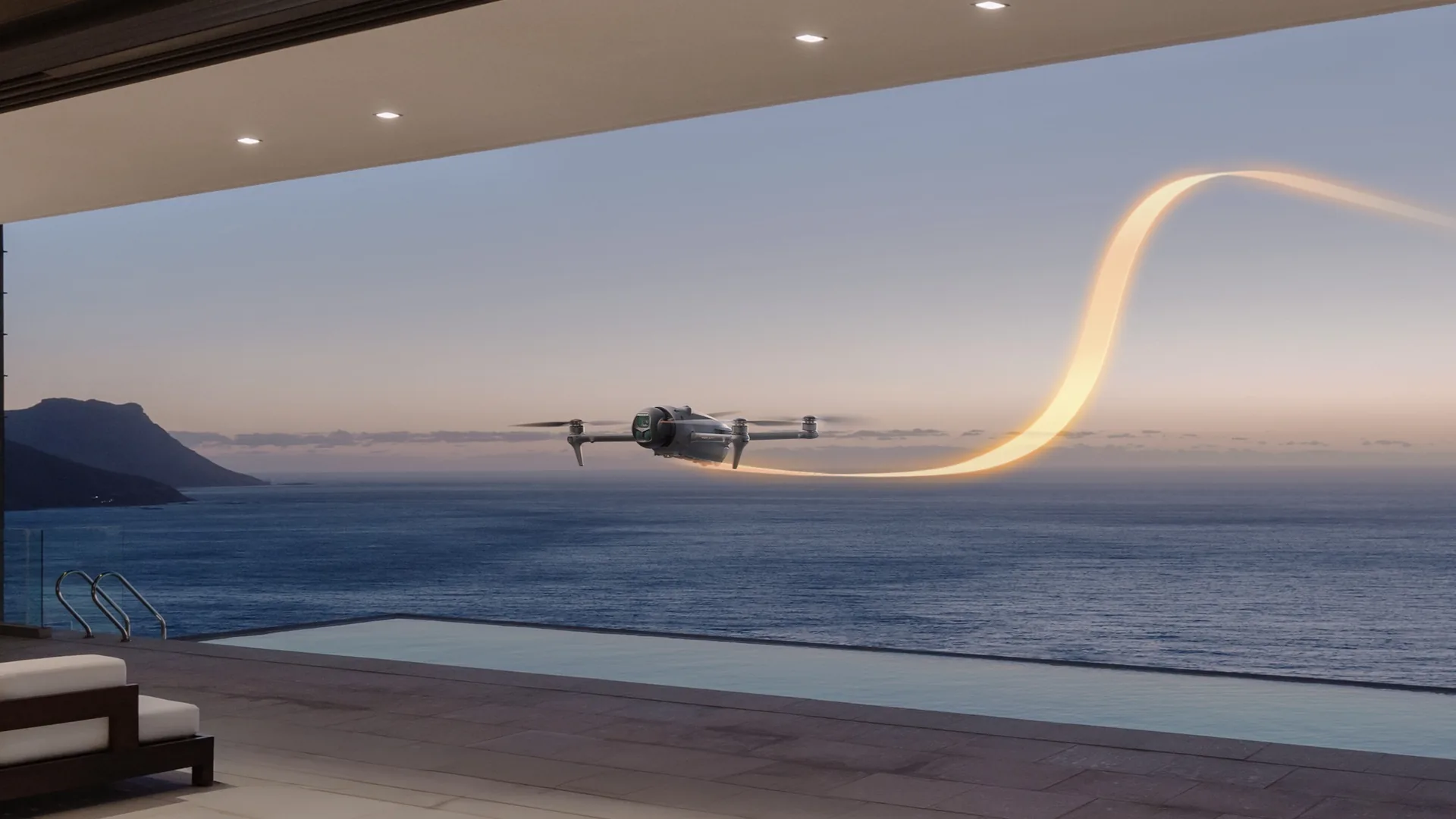
In a hotel film, the most requested shot is the aerial opening. The camera rises over the palms, the pool opens up, and the sea appears behind it. It is also usually the least planned shot.
Because getting a drone into the air is easy. The hard part is doing it at the right hour, in the right wind, with the right permits, and without disturbing the guests. Drone filming is as much a planning job as a piloting one.
I've covered preparing for a hotel shoot in a separate piece. This one is its counterpart in the air: everything that needs to be settled before filming a hotel or resort from above.
The sun comes first
In the air, the direction of the light matters even more than on the ground. On the ground you can take shelter in the shade of a tree or under an arcade. In the air there is nowhere to hide; the whole property sits under the same light at the same time.
So the plan starts with which way the hotel faces the sea. Most beachfront hotels in Antalya face the sea, which means roughly south: Konyaaltı, Lara, Kundu, Belek, Side, Alanya. Along the Kemer coast, the sea is to the east; the sun rises over the water in the morning and in the evening drops behind the mountains before it actually sets.
For a hotel facing the sea to the south, I read the day roughly like this:
- Morning: The air is calm, the light is low and comes from the side. Nobody has been in the pool yet, so the water is like a mirror and the sunbeds are empty. The most productive part of the day for aerial work.
- Midday: In summer the sun is almost overhead; in late June the midday sun in Antalya climbs to about 76 degrees. The facade goes flat and the shadows shrink. But it's a good hour for shots looking straight down: the geometry of the pool, the rows of umbrellas and the colour of the water are at their clearest at noon.
- Late afternoon: The light drops and warms up. The best time for orbits, wide shots that show the property within its landscape, and sea glitter shot into the sun.
- Blue hour: The short window after sunset. The pool and facade lights are on, and the sky hasn't gone dark yet. The only right moment to film the night lighting from the air.
There's a subtlety: in summer, the sun rises in the northeast and sets in the northwest. That means a facade facing due south gets no direct sun in the first hours of a summer morning or the last hours of the evening; the golden light falls on the side facades. In winter, the sun traces a low arc through the south, and the south facade gets light all day. The same hotel is filmed at different hours in July and in November.
In my piece on Antalya's light I explained how I use the midday hours on the ground. The logic in the air is the same: don't fight the sun, build the frame around its direction. Apps such as PhotoPills or Sun Surveyor show in advance where the sun will rise and set on the day of the shoot.
One more thing: before blue hour, ask the technical team to switch on every facade, pool and garden light. A hotel with half its lights on looks untidy from the air.
Wind and heat
On summer days, a breeze from the sea starts up along the coast towards midday, peaks in the afternoon and dies down towards sunset. That's another reason for morning and evening flights.
The wind you feel on the ground isn't the wind a hundred metres up; wind gets stronger with height. And the wind a drone can withstand is not the same as the wind it can film cleanly in. The drone stays in the air, but horizon lines wobble and a slow orbit comes out in jerks.
Plan for the way back. In the early morning the wind sometimes blows from the land out to sea; the drone flies out easily but has to come back against the wind. Calculate your battery for the return, not the outbound leg.
Heat is a limit too. Many drones are designed to operate up to 40 °C, and on July and August middays Antalya can go past that. A stone surface sitting in the sun is hotter than the air. Keep the batteries in the shade and don't leave the drone in the sun until take-off.
There's a trap in the opposite direction as well: a camera coming out of an air-conditioned car or room fogs up in the humid coastal air. Leave the drone outside for a few minutes before take-off.
A few more habits help on the coast:
- Use a landing pad. A drone taking off from sand gets sand in its motors and gimbal.
- Don't trust the sensors over water. A water surface can mislead the downward-facing positioning sensors. When flying low over a pool or the sea, it's all down to the pilot.
- Don't take off from a reinforced-concrete roof. Steel rebar and large metal structures can throw off the compass. Choose open, level ground away from metal structures.
- Set the return-to-home altitude. The automatic return altitude should be above the tallest building, crane or tree on the property.
Guests and privacy
A hotel isn't an empty venue; there are people on holiday inside it. That is the most sensitive side of aerial filming.
- Don't fly over guests. It's a matter of both safety and privacy. Flying over crowds is also one of the things the rules restrict.
- Use the early hours. Film while the pool and the beach are empty. That's why the morning shoot is the right time not only for the light but for the people too.
- Shoot from a distance, with a tele. A tele camera lets you frame the beach or the pool without going over anyone's head. That's why drones with two or three cameras are a serious advantage in hotel work.
- Mind the balconies. On a flight close to the facade, the camera can see into the rooms. Keep your distance on facade shots.
- Give notice in advance. Security, the front office, the beach manager and the entertainment team should know the filming times. If needed, a short note at reception to inform guests is enough.
If a guest is recognisable in the frame, it becomes a matter of personal data and consent. Every face that ends up in a promotional film needs written consent. Anyone without consent either stays out of the frame or is made unrecognisable.
Permits
In Turkey, there is a procedure for commercial filming with a drone over 500 grams:
- SHGM registration: every drone of 500 grams or more must be registered in the UAV Registration System of Turkey's Directorate General of Civil Aviation, SHGM (iha.shgm.gov.tr).
- Pilot certificate: UAVs between 500 grams and 4 kilograms require an İHA-0 pilot certificate.
- Commercial conditions: paid work additionally requires commercial operation conditions, third-party insurance and a flight permit.
- Airport proximity: some of the hotels in Lara and Kundu are very close to Antalya Airport. A property inside or at the edge of controlled airspace may need a special permit; sometimes flying isn't possible at all.
- The property's written permission: the hotel itself, its boundaries and the hours when flying is allowed should be in writing. Flying over neighbouring properties and private land is a separate matter.
The rules change from time to time; checking SHGM's current instructions before the shoot date is a must. If you're on the hotel side and working with a drone operator, ask for these documents at the proposal stage. Finding out on the day that you're close to the airport wipes out the whole plan.
The shot list
Aerial filming isn't something to improvise on set. Every shot should have a purpose and a time slot. The basic aerial shot list for a hotel looks like this:
- The opening: a move that rises from behind a palm, a roof or an arch to reveal the property and the sea. The first shot of the film.
- Bird's-eye view: the camera looks straight down. The geometry of the pool, rows of sunbeds, the pier, the line where sand meets water. Graphic and calm.
- The orbit: a slow circle around the main building or the pool. Works best in late-afternoon light.
- Architectural detail: from a distance with a tele: the roofline, the rhythm of the balconies, a dome, a corner of the pool. The compressed perspective of a tele makes the property look composed. I've covered where the 70 and 168 mm teles fit into this work in my Mavic 4 Pro review.
- Location: the wide shot that tells you where the hotel is: the coastline, the mountains behind, the distance to the beach or the city. Guests want to know this before they book.
- Blue hour: the facade with its lights on, the illuminated pool.
- Vertical cuts: separate vertical shots for Reels, TikTok and stories. Composed vertically from the start, not cropped from horizontal footage.
Film every move as clean takes of 10 to 15 seconds at a steady speed, and leave a few seconds of handle at the start and end. The editor will thank you for those few seconds.
Delivery
Aerial footage shouldn't look like a world apart from the rest of the film. For that, a few things need to be agreed before delivery:
- The same colour language: the drone footage is shot at the same frame rate and in a log profile like the ground cameras, and graded together with them. Shots that will be slowed down (water, waves, splashes) are filmed at 50 or 60 frames.
- Master file: a 4K master, or higher if the drone allows.
- Vertical versions: separate vertical edits for social media.
- Stills: a still pulled from a video frame isn't enough for print. Aerial photos are shot separately, in photo mode and in RAW.
- Usage rights: in which media, for how long, in which countries. And who keeps the raw footage. I've covered this in detail in my piece on usage rights; the same rules apply to drone footage.
Conclusion
A good aerial shot is made the day before the flight. Once you know the direction of the sun, the hour of the wind, the status of the permits and where the guests will be, the flight itself is the shortest part of the job.
The ordinary sends the drone up. The rebellious knows how to wait for the light.